At the Cutting Table: Posture, Hands and the Long Sewing Session
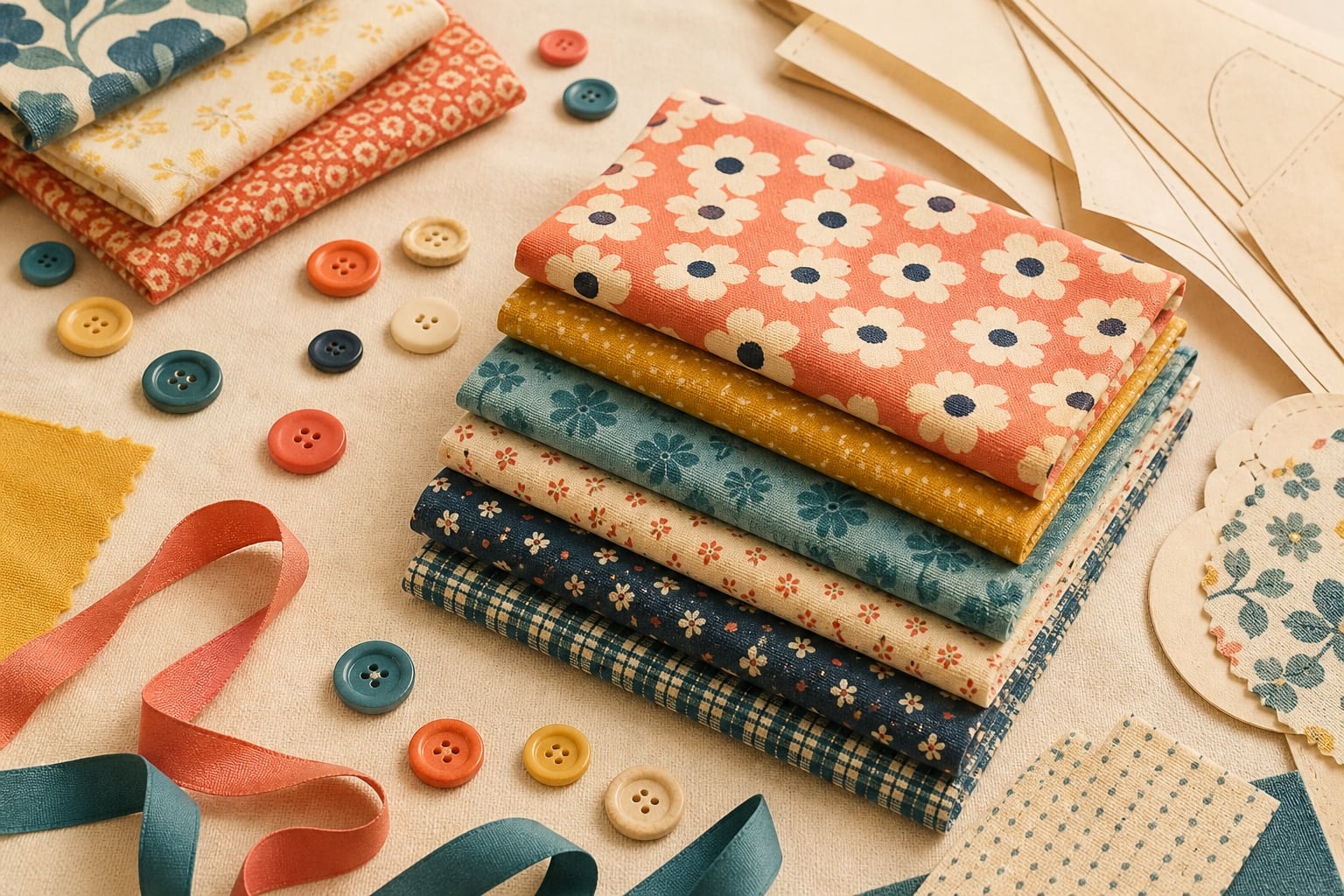
A length of patterned cloth can occupy the eye long before the first stitch. A home sewing or quilting session may move from yardage spread over the cutting table to pressing and then to the machine. Alongside questions about motif and repeat sit questions about work height, reach, light and time spent in one position.
The cutting table, pressing surface and machine seat can be considered separately. Where does each put the hands? Does the work call for a bent neck or a long reach? Workplace research and guidance provide a vocabulary for examining these arrangements, with limits that matter when applying them to a hobby.
What studies of sewing work have found
A 2025 systematic review in BMJ Open of garment-worker studies included 14 studies involving 15,029 workers. The share of workers reported to have musculoskeletal problems ranged from 15.5% to 92% across the studies, with low back and neck pain commonly reported. The review linked risk to repetitive tasks, extended working hours and inconsistent workstations.
These were industrial garment workers, not home sewists or quilters. The broad range describes findings across those studies; it is not a single rate to apply to a person sewing at home. The useful connection is the attention to repeated tasks and the arrangement of the work, while keeping the populations distinct.
The cutting table and the height of the work
The Canadian Centre for Occupational Health and Safety, or CCOHS, describes the muscular effort involved in standing work. Its guidance on working in a standing position notes that standing reduces blood supply to loaded muscles. Regular standing work can bring sore feet, muscular fatigue, low back pain and stiffness in the neck and shoulders.
CCOHS uses elbow height as a guide to work-surface height. For precision work it gives about 5 cm above the elbow, with elbow support; for light work, about 5–10 cm below; and for heavy work demanding downward force, 20–40 cm below. These are workplace task categories, not fixed measurements for a cutting or pressing table. The task and the person's dimensions belong in the assessment together.
For standing work, the same guidance recommends keeping close to the work, placing usual operations within easy reach and avoiding extreme bending and twisting. It also recommends frequent changes of position, a footrest for shifting weight and a seat whenever the work allows. A cutting table and pressing surface are two places to consider these principles rather than expecting one standing arrangement to suit the whole session.
At the machine: seat, reach and the pedal
CCOHS's guidance for seated work and manual tasks describes relaxed shoulders, elbows close to the body and bent between 90° and 120°, and straight, aligned hands, wrists and forearms. The head and neck are upright. Materials should be at or slightly below elbow height, with excessive reach avoided.
At a sewing machine, these points offer questions about the relationship between chair, work surface and cloth. The guidance also says foot tasks should be positioned without twisting the hips, with support for both the working and non-working legs. Considering a machine pedal as a foot task is an application of that general guidance, not a finding from research on home sewing.
No one seated position remains comfortable over a long period, CCOHS cautions. Its recommendations include allowing adjustment and movement between balanced positions. A comfortable starting arrangement is therefore only part of the question; room to change position also matters.
Hands, wrists and the recovery gap
The CCOHS account of repetitive work and muscle recovery identifies fixed postures, continual repetition, concentrated force on the hand or wrist and a pace without enough recovery as workplace risk factors. Ordinary movements such as gripping and reaching are not presented as inherently harmful; repetition, force and time for recovery change the context.
The fact sheet explains that a long muscle contraction reduces blood flow, allowing by-products to accumulate and irritate the muscle. It relates pain to both the length of contractions and the time between activities. For a sewing session, this makes time spent holding a position relevant alongside visible hand movement. Stillness at the machine deserves attention as well as repetition at the cutting table.
Changing tasks, and the limits of break studies
CCOHS describes task rotation as work that engages different muscle groups, allowing those already strained to recover. Simply changing the name of the task is not the point. In a sewing session, consider whether moving between cutting, pressing and machine work actually changes the position and muscular demands. The same workplace guidance recommends using short gaps between tasks to relax the muscles.
Evidence about extra breaks remains uncertain. A 2025 Cochrane review of work-break interventions included nine trials and 626 workers, 98% of them office workers. The authors judged the evidence about additional breaks and back or neck pain very uncertain. None of the trials examined break duration, and the authors called for research in other worker populations.
That review does not establish a break timetable for home sewing or quilting. Workplace advice about changing positions and tasks can guide an examination of the session, while the effect of a particular break schedule remains an open question.
Light for close work and for color
CCOHS's lighting guidance, including color judgement in sewing environments identifies small objects and low contrast as difficulties for seeing at work. It describes task lighting as increasing light over the work and its immediate surroundings, with glare and shadows also relevant to lighting quality.
Color judgement is a separate concern. The guidance explains that the light's composition affects the color seen, and says full spectrum lighting may be needed where color judgement matters, explicitly naming fabric manufacturing and sewing environments. The canary yellow color study explores the textile side of this question. Seeing a close detail and comparing a palette deserve attention in their own right.
Notice the need to pause
In its workplace discussion, CCOHS describes aching and tiredness during a shift that disappear at night or on days off. It identifies the first pain, numbness or tingling as signals that muscles and tendons need rest and recovery in its guidance on recognizing those signals. A planned stopping point in the cloth is not a reason to disregard them.
Work height, reach, position changes, recovery gaps and light provide a practical way to look across the whole sewing session. Consider each setting in turn: the length of cloth on the table, the pressing surface and the seated work at the machine.