Vinyl-Coated Fabric: Surface, Construction, and Care
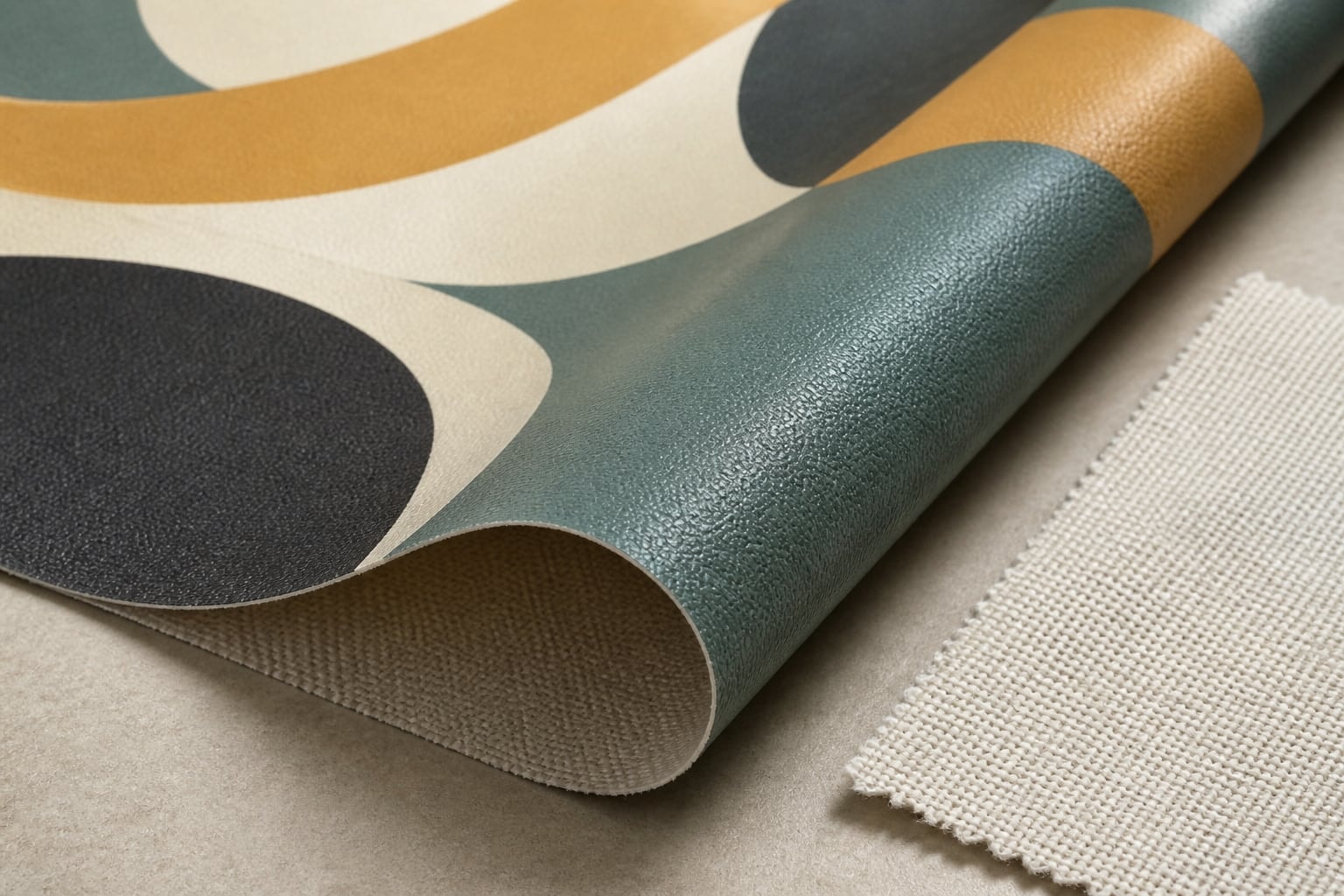
Vinyl-coated fabric is a layered material whose composition, backing, finish, dimensions, and pattern can vary widely. A useful guide therefore begins with visible construction, surface behavior, flexibility, seams, care, and the limits of identification from appearance alone.
Coated fabric is a layered material
A coated textile combines a flexible base with a surface layer that changes touch, reflection, resistance, and drape. The base may be woven, knitted, nonwoven, or otherwise constructed; the coating may sit mainly on one face or penetrate farther into the structure. Visual inspection alone may not identify the chemistry of either layer.
Useful observations include whether the reverse shows yarns, whether the face is matte or glossy, how the material bends, and whether fine cracks appear along folds. A wipe-clean surface is not the same as a waterproof assembly. Seams, needle holes, edges, and wear can all allow moisture through, and performance claims require reliable technical documentation.
Light changes the pattern
Gloss can make a printed motif seem higher in contrast. Highlights travel as the surface bends, temporarily obscuring dark or saturated areas. Matte coatings scatter light more evenly but can still change color depth. Photograph both straight-on and at a shallow angle under diffuse illumination to document pattern and surface separately.
A large motif may become fragmented by specular highlights on folds, while a small repeat often remains readable as texture. The general fabric scale and repeat guide applies, but coated surfaces add reflection as another compositional variable.
Plan before making holes
Needle holes in many coated materials remain visible and may weaken a narrow seam allowance. Test on a documented scrap of the same material when possible. Clips or weights avoid unnecessary pinholes during layout, provided they do not mark the face. Longer stitches may reduce perforation compared with very short stitches, but the appropriate setting depends on the specific backing, coating, thickness, and intended load.
Friction against a machine bed or presser foot can cause uneven feeding. Supporting the material's weight and reducing drag helps keep layers aligned. Do not apply heat, solvents, adhesives, or lubricants without verified compatibility. A method that works on one coated textile can cloud, melt, stiffen, stain, or delaminate another.
Choose form around stiffness and recovery
Coated fabric often holds shape more strongly than uncoated cotton, though behavior varies widely. Structured flat panels take advantage of this body. Tight gathers and small turned details may create bulk or permanent creases. Rounded forms can reveal whether the surface recovers cleanly after bending or develops stress whitening.
A paper mockup is useful for testing panel proportions and seam placement before the textile is handled. On patterned material, it also shows how the motif crosses edges and joins. Keep load-bearing requirements separate from decorative suitability; without technical specifications, appearance cannot establish strength.
Cleaning is material-specific
Begin with the least intervention. Remove loose dust gently and use only methods supported by reliable information for that exact material. Household cleaners can contain solvents, fragrances, dyes, or surfactants that alter a surface over time. Abrasive pads may remove gloss or printed color. Water can reach the backing through cracks, holes, and cut edges.
Older coatings may become sticky, brittle, yellowed, or cracked as components migrate or break down. This deterioration is not necessarily reversible, and sealing the material in plastic can create an unfavorable microenvironment. The National Park Service textile-care handbook emphasizes environmental control, limited handling, and supported storage for collection objects.
Storage without sharp folds
Avoid tight creases, pressure from heavy objects, heat, sustained bright light, and proximity to materials known to transfer color or plasticizers. Keep a flat piece flat when its condition and size allow, with an appropriate inert support. If rolling is suitable, use a broad supported curve rather than a small tight tube, and protect the surface from abrasion.
The Smithsonian Museum Conservation Institute textile-conservation overview describes professional work as a combination of examination, documentation, treatment, preventive care, and research. That sequence begins with identifying the object and its condition, not with assuming a universal cleaning method.
Keep identification cautious
The word vinyl may appear in a historical title while leaving the precise layer structure unresolved. Record front, reverse, thickness, flexibility, odor only without prolonged exposure, edge construction, cracking, tackiness, and any reliable labels. Avoid destructive tests on a historical piece. A specialist can help distinguish materials and recommend safe storage.
Coated fabric is best understood as a system—base, surface, pattern, seams, edges, and environment—not merely as a shiny cloth. Identification and care should remain specific to the material at hand.